

Tennis Elbow
What Is Tennis Elbow?
Tennis elbow, medically known as lateral epicondylitis, is a condition that causes pain on the outer side of the elbow. It develops when the tendons connecting the forearm muscles to the lateral epicondyle become irritated or structurally compromised due to repetitive stress.
Although historically described as an inflammatory condition, many chronic cases involve tendon degeneration (tendinosis) characterized by microscopic collagen disruption rather than active inflammation. The condition is not limited to athletes and frequently affects individuals who perform repetitive gripping, lifting, or wrist extension movements.
Symptoms can range from mild discomfort to persistent pain that interferes with daily activities such as lifting objects, shaking hands, typing, or using tools.
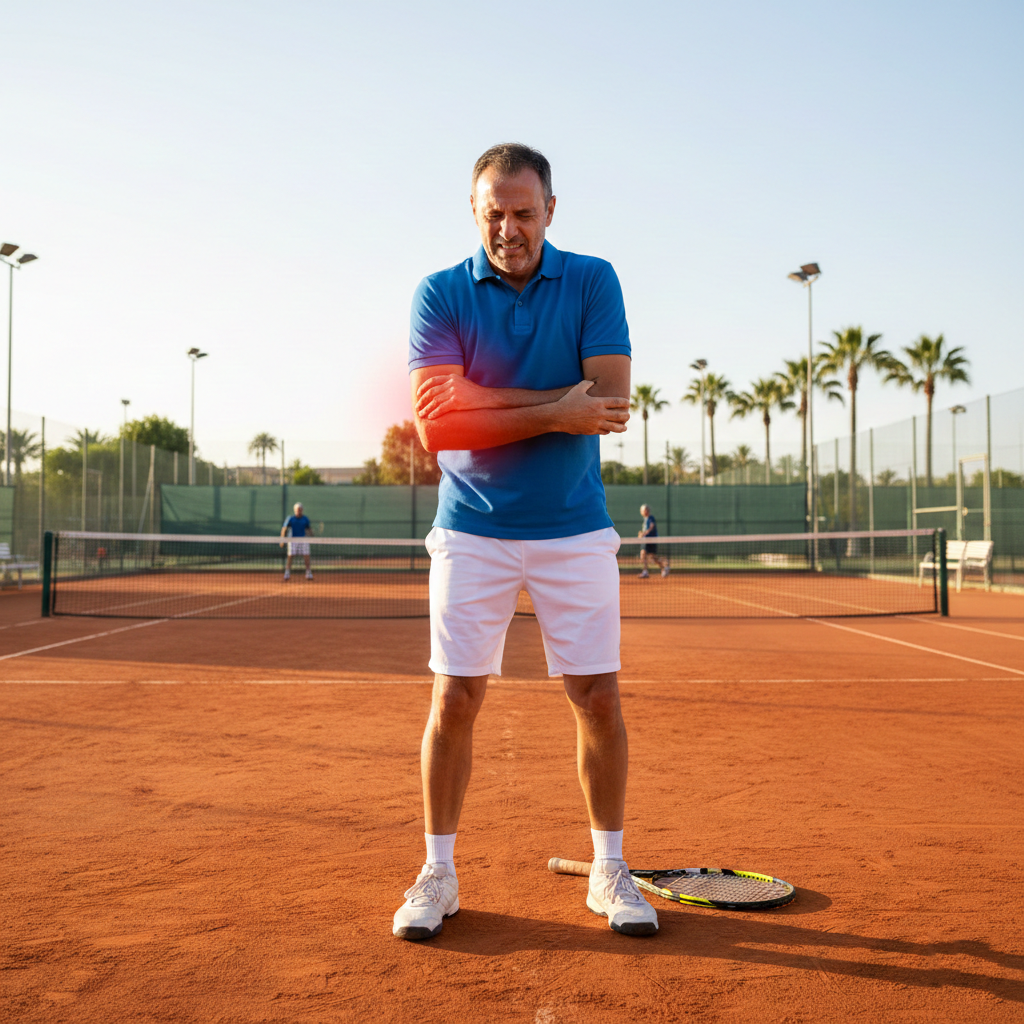
What Are the Causes
Tennis elbow typically develops when repetitive mechanical stress overloads the extensor tendons of the forearm, particularly the extensor carpi radialis brevis (ECRB).
Common contributing factors include:
• Repetitive wrist extension or gripping
• Racquet sports
• Manual labor (carpentry, plumbing, painting)
• Frequent tool use
• Typing or prolonged computer work
• Sudden increase in activity intensity
• Age-related decline in tendon elasticity
Over time, repeated strain can exceed the tendon’s ability to repair, leading to microtears and collagen disorganization.
Symptoms
The most common symptom is pain and tenderness over the outer elbow near the lateral epicondyle.
Additional symptoms may include:
• Pain radiating into the forearm
• Reduced grip strength
• Pain with wrist extension
• Discomfort when lifting objects palm-down
• Burning sensation along the outer forearm
Symptoms often worsen with repetitive tasks and may become persistent if untreated.
How Many People Are Affected?
Tennis elbow affects approximately 1–3% of adults annually. It most commonly occurs between ages 30 and 60.
Despite the name, the majority of cases occur in non-athletes. Individuals with occupations involving repetitive arm movements are at increased risk.
Complications
If untreated, tennis elbow may progress to chronic tendon degeneration. Persistent structural weakening can reduce grip strength and alter arm mechanics, potentially leading to compensatory strain in the shoulder or wrist.
In advanced cases, partial tendon tearing may occur. Early evaluation reduces the risk of long-term dysfunction.
Diagnosis
Diagnosis begins with clinical evaluation and physical examination. Tenderness over the lateral epicondyle and pain with resisted wrist extension are common findings.
At Victory Over Pain, Diagnostic Ultrasound may be used to evaluate:
- Tendon thickening
• Collagen fiber disruption
• Partial tearing
• Increased vascularity
• Degenerative changes
Ultrasound also assists in guiding regenerative procedures when appropriate.
MRI may be considered in complex or persistent cases.
Treatment Options
Treatment options depend on symptom duration, tendon integrity, and prior response to therapy. In early cases, conservative management is typically recommended and may include activity modification, structured physical therapy, eccentric strengthening exercises, bracing or counterforce straps, and ergonomic adjustments. Many patients experience meaningful improvement with a rehabilitation-focused approach.
If symptoms persist, advanced non-surgical therapies may be evaluated. Extracorporeal Shockwave Therapy (ESWT) may support collagen remodeling and improve local circulation in chronic tendon degeneration. Platelet-Rich Plasma (PRP) therapy involves injecting concentrated platelets into the affected tendon to deliver growth factors and encourage structural repair. Low-Level Light Therapy (LLLT) may also be incorporated to support cellular energy production, reduce inflammation, and enhance soft tissue recovery.
In more advanced cases involving significant degeneration or partial tearing, regenerative biologic options such as MSC-derived exosome therapy or stem cell therapy may be considered based on physician evaluation. Surgical intervention is rarely required and is typically reserved for cases that do not respond to extended conservative and regenerative treatment.
Trusted Resources
SCHEDULE A CONSULTATION
Request a Physician Evaluation
Submit your information to connect with a participating physician in your region to determine whether regenerative therapy may be appropriate for your condition.