

Extracorporeal Shockwave Therapy (ESWT)
Extracorporeal Shockwave Therapy (ESWT)
What Is Extracorporeal Shockwave Therapy (ESWT)?
Shockwave therapy is a non-invasive regenerative treatment that uses targeted acoustic energy to stimulate the body’s natural repair processes. Originally developed to break down kidney stones through lithotripsy, the technology has since evolved into a widely studied modality for chronic musculoskeletal conditions, particularly tendon disorders, joint irritation, and soft tissue injuries.
Rather than suppressing symptoms, shockwave therapy works by delivering controlled mechanical pulses into damaged tissue. These pulses create microscopic stimulation within the area, encouraging biological repair activity. In chronic conditions where healing has stalled, this mechanical signaling can reactivate the body’s natural recovery cascade.
Shockwave therapy is frequently considered when conservative approaches such as rest, anti-inflammatory medication, or physical therapy have not provided sustained improvement. Its role is to promote tissue regeneration by improving blood flow, stimulating collagen production, and restoring functional mobility.
How Extracorporeal Shockwave Therapy (ESWT) Supports Healing
Shockwave therapy influences tissue repair through mechanical and biological mechanisms. When acoustic waves penetrate the skin and underlying structures, they create rapid pressure changes within the tissue. This controlled micro-stimulation initiates an inflammatory response that is necessary for regeneration in chronically irritated or degenerative areas.
Fibroblasts—the cells responsible for collagen formation—are activated by this stimulation. Increased collagen synthesis supports strengthening of tendons, ligaments, and connective tissue. In areas with poor circulation, shockwave therapy promotes angiogenesis, or the development of new blood vessels, enhancing oxygen and nutrient delivery.
Shockwave pulses also help disrupt fibrotic tissue and calcific deposits that may contribute to stiffness or chronic discomfort. By modifying local pain signaling pathways and improving tissue metabolism, the therapy can reduce persistent pain while encouraging structural repair.
Types of Extracorporeal Shockwave Therapy (ESWT)
There are two primary forms of shockwave technology used in musculoskeletal care.
Focused Shockwave Therapy delivers concentrated energy to deeper tissues. It is typically used for chronic tendon injuries, calcific conditions, and deeper joint-related irritation where precise penetration is required.
Radial Shockwave Therapy disperses energy across a broader surface area. It is often used for plantar fasciitis, superficial tendon irritation, muscle tightness, and soft tissue dysfunction. While less penetrative than focused shockwave, it effectively improves circulation and reduces localized inflammation.
The selection of technology depends on tissue depth, injury location, and clinical evaluation.
Conditions Where Extracorporeal Shockwave Therapy (ESWT) May Be Used
ESWT is generally considered in conditions where mechanical tendon degeneration is present without advanced structural rupture. Shockwave therapy is most commonly evaluated in conditions involving chronic tendon irritation, calcific deposition, soft tissue dysfunction, and incomplete healing responses. Clinical selection is based on imaging findings, tissue integrity, symptom duration, and prior treatment response.
Foot & Ankle Issues
Plantar Fasciitis
Achilles Tendinitis
Elbow Issues
Tennis Elbow (Lateral Epicondylitis)
Golfer’s Elbow (Medial Epicondylitis)
Shoulder Issues
Shoulder Impingement
Rotator Cuff Tendinopathy
Calcific Shoulder Tendinitis
Knee & Hip Issues
Patellar Tendinopathy
Chronic Hip Tendon Irritation
Spine & Pain Issues
Myofascial Pain Syndrome
Chronic Soft Tissue–Related Back Pain
Clinical selection depends on severity, chronicity, prior treatment response, and overall patient health.
What to Expect During Treatment
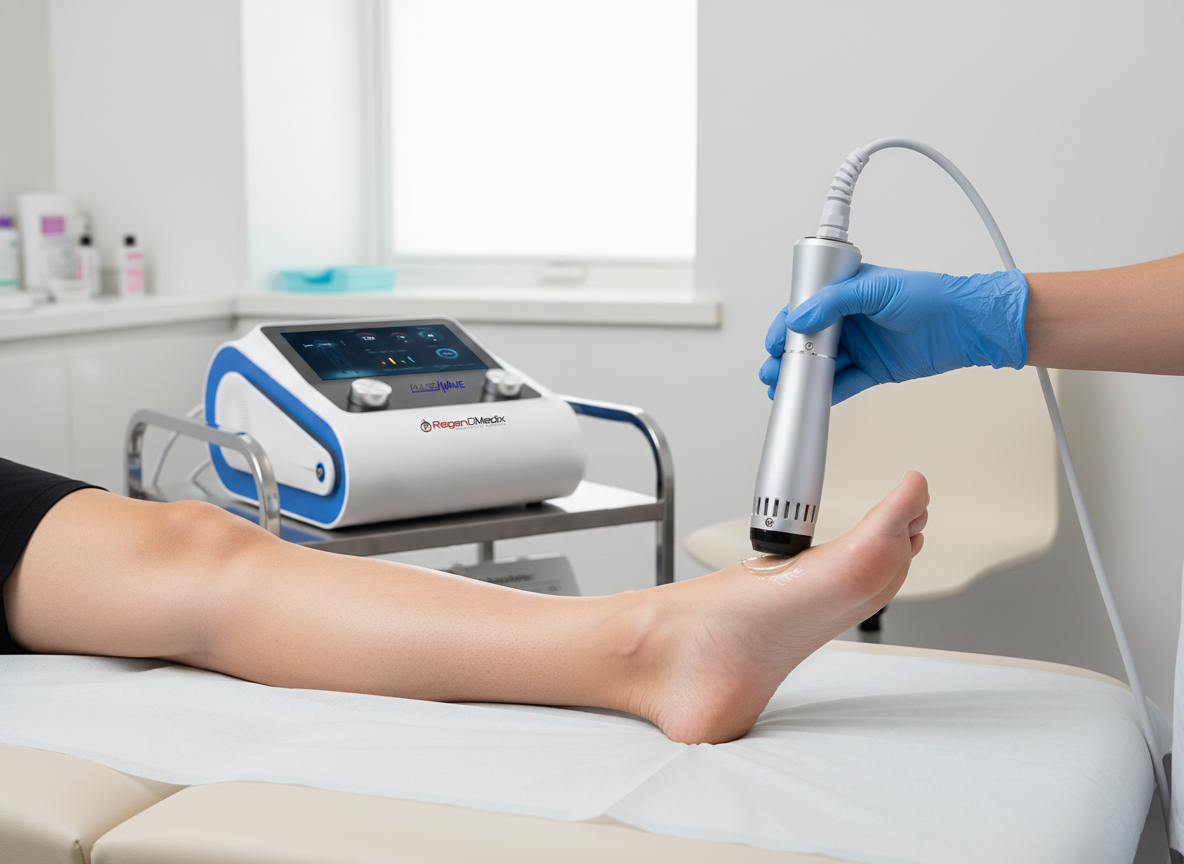
Shockwave therapy is performed in-office and does not require anesthesia or surgical preparation. A handheld applicator delivers acoustic pulses to the targeted area over a short treatment session. Most patients tolerate the procedure well, although mild discomfort during treatment is possible depending on tissue sensitivity.
Following treatment, some individuals experience temporary soreness, which typically resolves within a few days. Because shockwave therapy works by stimulating the body’s repair response, gradual improvement often occurs over several weeks as collagen remodeling and vascular changes develop.
ESWT and Regenerative Biologic Therapies
Unlike stem cell or exosome therapies, shockwave therapy does not introduce biologic material. Instead, it uses mechanical stimulation to activate the body’s natural repair pathways. In some cases, shockwave therapy may be used alone, while in others it may complement regenerative injections such as PRP, depending on tissue condition and clinical goals.
Extracorporeal Shockwave Therapy (ESWT) Compared to Conventional Treatments
Traditional approaches for chronic tendon and joint pain often include anti-inflammatory medications, corticosteroid injections, bracing, or surgical intervention in advanced cases. Shockwave therapy differs by targeting the biological repair process rather than suppressing inflammation alone.
While steroid injections may temporarily reduce symptoms, they do not stimulate collagen regeneration. Shockwave therapy aims to convert chronic, stagnant tissue irritation into an active healing response, encouraging long-term structural improvement.
It may also be used in combination with regenerative modalities such as Platelet-Rich Plasma (PRP) when clinically appropriate.
Important Considerations Before Treatment
Not every patient or condition is an ideal candidate for shockwave therapy. A thorough clinical evaluation, including physical examination and imaging review when indicated, helps determine whether the condition is appropriate for mechanical stimulation therapy.
Patients with certain circulatory disorders, active infection, or specific medical conditions require individualized assessment before proceeding.
Shockwave therapy is not designed as a one-size-fits-all solution. It is part of a comprehensive treatment strategy that may include physical therapy, activity modification, and other regenerative options depending on the severity and chronicity of the condition.
SCHEDULE A CONSULTATION
Request a Physician Evaluation
Submit your information to connect with a participating physician in your region to determine whether regenerative therapy may be appropriate for your condition.