

Platelet-Rich Plasma
Platelet-Rich Plasma
What is Platelet-Rich Plasma Therapy?
Platelet-Rich Plasma (PRP) therapy is a regenerative medical treatment that utilizes a concentrated portion of a patient’s own blood to support tissue repair and regulate inflammation. Because PRP is derived directly from the individual receiving treatment, it is considered an autologous biologic therapy. Rather than introducing foreign substances into the body, PRP amplifies naturally occurring healing components already present in the bloodstream.
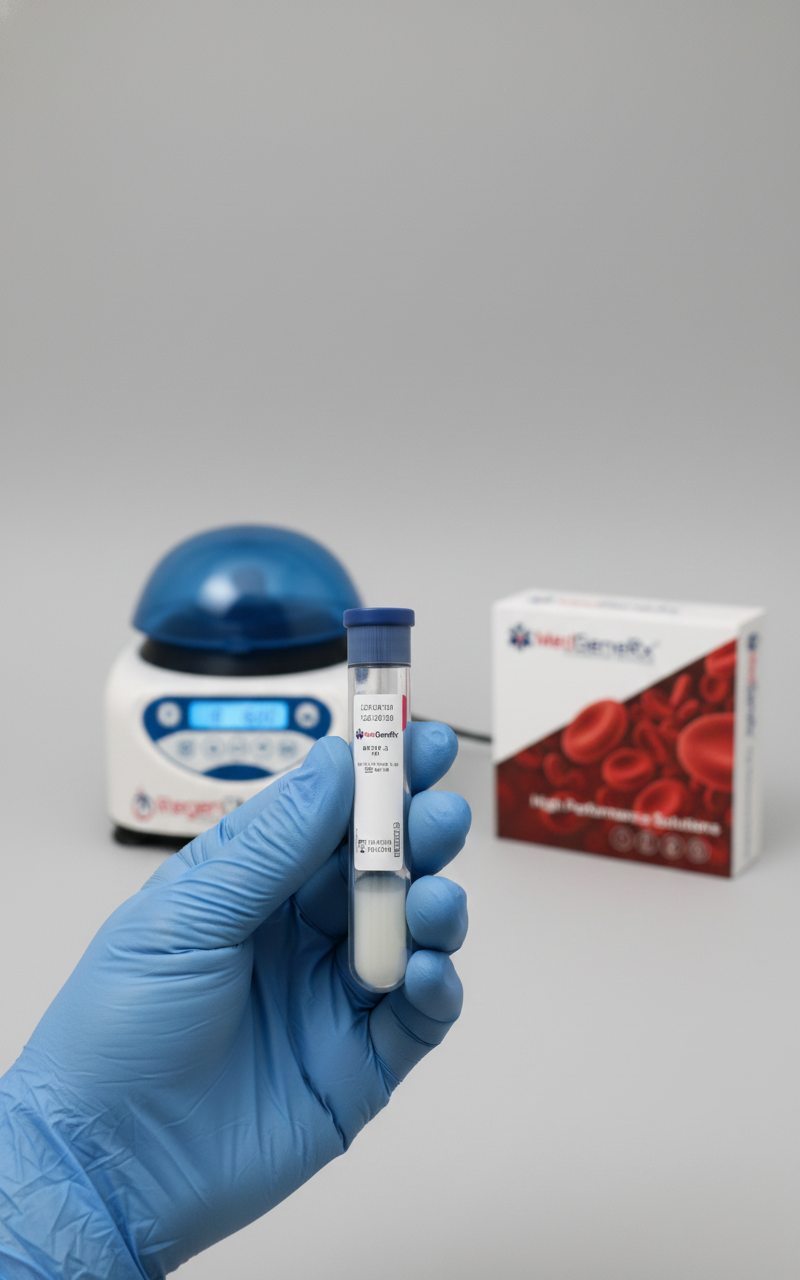
The process begins with a small blood draw performed in the clinical setting. The sample is then processed through controlled centrifugation to separate and concentrate platelets and plasma proteins. These platelets contain growth factors and signaling molecules that play a critical role in tissue healing, vascular formation, and cellular communication. Once prepared, the platelet-rich concentrate is injected into the targeted area to support structural recovery and biologic repair.
PRP therapy is not designed to simply mask discomfort. Its purpose is to influence the underlying healing environment by enhancing collagen production, improving circulation, and modulating inflammatory pathways that contribute to chronic orthopedic and soft tissue conditions.
How PRP Supports Tissue Repair
When introduced into damaged or degenerative tissue, PRP activates a biologic cascade that occurs in three primary stages. In the initial inflammatory phase, platelets release growth factors such as PDGF, TGF-β, and VEGF, which recruit repair cells and initiate a controlled inflammatory response necessary for healing. This stage helps clear damaged tissue and prepares the environment for regeneration.
During the proliferative phase, fibroblasts and other repair cells increase collagen synthesis and extracellular matrix production. This supports structural reinforcement in tendons, ligaments, joint-supporting tissue, and chronic wound environments. Improved angiogenesis, or new blood vessel formation, enhances oxygen and nutrient delivery to the affected area.
In the remodeling phase, newly formed collagen fibers reorganize and strengthen over time. This maturation process contributes to improved tissue stability, functional movement, and long-term durability. Because PRP works through signaling rather than permanent cell replacement, it supports the body’s own regenerative mechanisms rather than replacing tissue directly.
Conditions Where Platelet-Rich Plasma (PRP) May Be Used
Clinical selection is based on tissue quality, severity of degeneration, imaging findings, and prior treatment response.
PRP is most commonly evaluated in conditions involving chronic tendon irritation, early degenerative joint changes, ligament strain, and delayed soft tissue healing.
Orthopedic & Soft Tissue Issues
PRP therapy may be evaluated in:
Knee Osteoarthritis (early to moderate)
Hip Osteoarthritis (select cases)
Rotator Cuff Tendinopathy
Shoulder Impingement
Tennis Elbow (Lateral Epicondylitis)
Golfer’s Elbow (Medial Epicondylitis)
Patellar Tendinopathy
Achilles Tendinitis
Plantar Fasciitis
Ligament Injury Pain
Meniscus Irritation (non-displaced, degenerative patterns)
These conditions often involve collagen breakdown or chronic inflammation where biologic signaling may support tissue repair.
Pain-Related Issues
PRP may be evaluated in select cases of:
Chronic Joint Pain
Tendinopathy
Myofascial Pain Syndrome
Persistent Post-Surgical Joint Pain
Wound Healing
PRP may also be evaluated in:
Diabetic Foot Ulcers
Post-Surgical Wounds
Non-Healing Incisional Wounds
PRP supports angiogenesis and tissue remodeling within compromised wound environments.
Preparation and Clinical Considerations
PRP is prepared in-office using sterile technique. After centrifugation, the platelet-rich layer is carefully isolated while minimizing contamination from red blood cells and excess inflammatory cells. The concentration of platelets can vary depending on preparation systems and protocols, which is why proper equipment selection and clinician training are important components of treatment quality.
Because PRP uses the patient’s own blood components, risks related to allergic reaction or disease transmission are low when appropriate standards are followed. Some patients may experience temporary soreness, mild swelling, or localized discomfort at the injection site. These effects are typically self-limited and reflect the inflammatory signaling necessary for tissue repair.
Patients with active infection, certain blood disorders, or specific medical conditions require careful evaluation before undergoing PRP therapy. A thorough medical assessment and imaging review are recommended to determine candidacy.
PRP Compared to Conventional Approaches
Unlike stem cell therapy, PRP does not introduce cellular elements but instead concentrates and redeploys the patient’s own platelets and growth factors. Conventional orthopedic treatments often focus on symptom management through medications, steroid injections, or activity modification. PRP therapy differs in that it aims to influence biologic repair processes by supporting collagen regeneration, improving vascular supply, and encouraging structural recovery over time. While outcomes vary based on condition severity and patient-specific factors, regenerative approaches seek to address underlying tissue quality rather than only reducing pain signals.
Important Considerations Before Treatment
Individuals considering PRP therapy should discuss their diagnosis, prior treatment history, imaging findings, and realistic expectations with their physician. The severity and duration of symptoms, as well as overall health status, influence candidacy and projected outcomes. PRP therapy is not appropriate for every condition, and careful evaluation ensures the most appropriate treatment strategy.
SCHEDULE A CONSULTATION
Request a Physician Evaluation
Submit your information to connect with a participating physician in your region to determine whether regenerative therapy may be appropriate for your condition.