

Low-Level Light Therapy (LLLT)
Low-Level Light Therapy (LLLT)
What Is Low-Level Light Therapy?
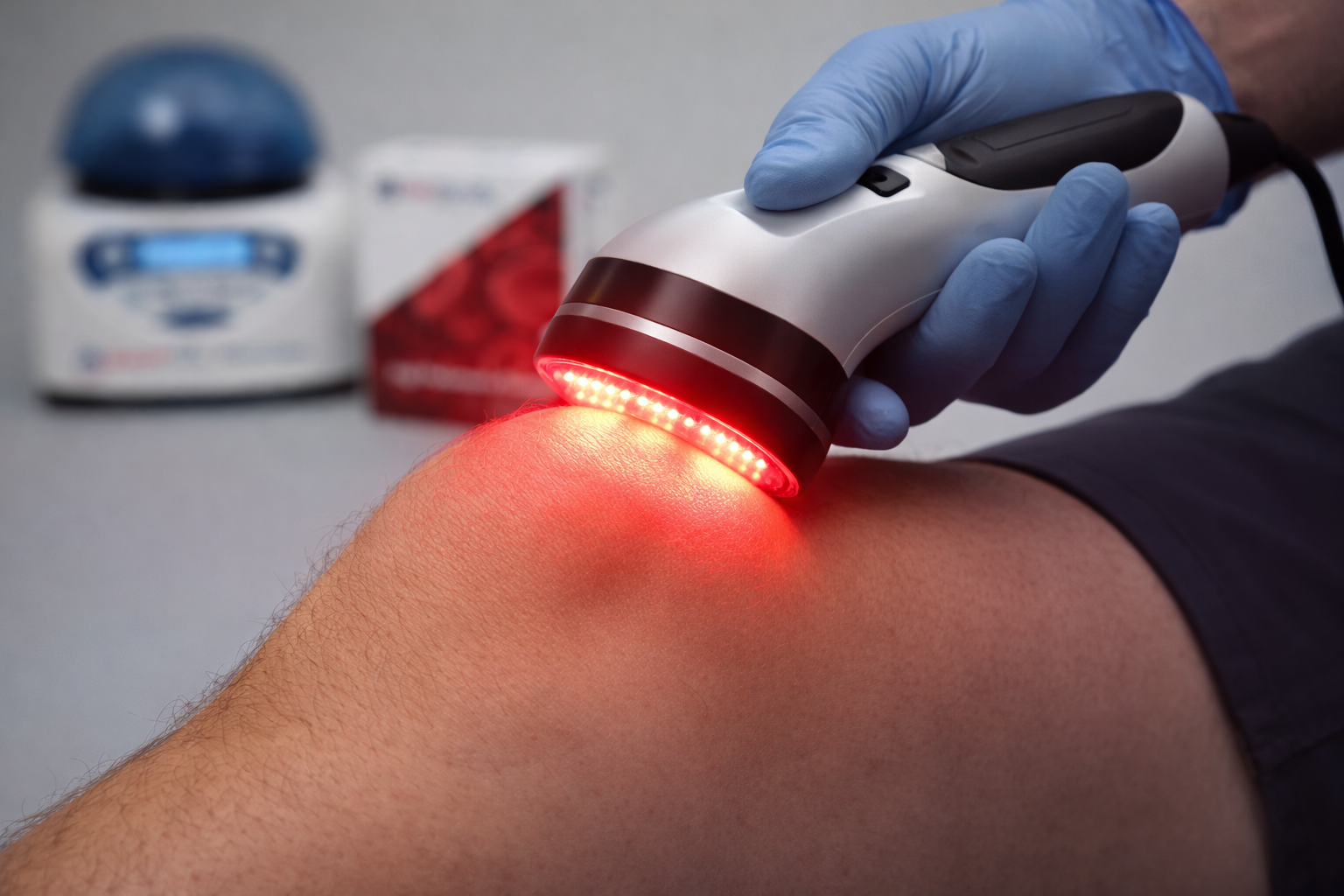
Low-Level Light Therapy (LLLT), also known as photobiomodulation therapy, is a non-invasive treatment that uses specific wavelengths of red and near-infrared light to support tissue repair, reduce inflammation, and improve cellular energy production.
Unlike surgical or injectable therapies, LLLT does not introduce biologic material into the body. Instead, it delivers controlled light energy that penetrates tissue and stimulates mitochondrial activity within cells.
This stimulation enhances adenosine triphosphate (ATP) production — the primary energy source for cellular function — which plays a critical role in tissue recovery and inflammation modulation.
LLLT is commonly incorporated into comprehensive regenerative care strategies for musculoskeletal and soft tissue conditions.
How Low-Level Light Therapy Supports Tissue Repair
Photobiomodulation influences healing through several biological mechanisms:
- Increased cellular ATP production
- Modulation of inflammatory signaling pathways
- Improved microcirculation
- Enhanced oxygen delivery
- Reduction of oxidative stress
Red light wavelengths (typically around 660nm) are absorbed at superficial tissue depths and may support tendon and soft tissue recovery.
Near-infrared wavelengths (typically around 810–850nm) penetrate deeper and may influence joint structures, muscle tissue, and nerve-related discomfort.
By improving the local cellular environment, LLLT may help support tissue repair in areas of chronic inflammation or incomplete healing.
Conditions Where Low-Level Light Therapy May Be Used
LLLT may be incorporated as part of a treatment plan in selected orthopedic, pain-related, and wound-healing conditions.
Orthopedic Issues
- Shoulder Impingement
- Rotator Cuff Tendinopathy
- Tennis Elbow
- Golfer’s Elbow
- Plantar Fasciitis
- Achilles Tendinitis
- Knee Osteoarthritis (early stages)
- Chronic Tendinopathy
LLLT is often considered when inflammation and soft tissue irritation are present without advanced structural rupture.
Pain Issues
- Myofascial Pain Syndrome
- Chronic Joint Pain
- Neck Pain
- Chronic Low Back Pain (soft tissue-related)
- Post-Surgical Joint Pain
Because light therapy influences inflammatory signaling and nerve sensitivity, it may support symptom reduction in select inflammatory pain patterns.
Wound Healing
LLLT may assist in supporting tissue recovery in:
- Diabetic Foot Ulcers
- Venous Leg Ulcers
- Post-Surgical Wounds
- Non-Healing Incisional Wounds
Photobiomodulation may promote angiogenesis and cellular repair processes in compromised wound environments.
LLLT and Regenerative Biologic Therapies
Low-Level Light Therapy does not replace regenerative injections such as PRP, MSC-derived exosomes, or stem cells. Instead, it may complement these treatments by optimizing the tissue environment before or after biologic intervention.
In some cases, LLLT may be used as a conservative standalone therapy. In others, it may support recovery as part of a multi-modality regenerative strategy.
Treatment selection depends on structural findings, symptom chronicity, and overall clinical goals.
Important Considerations Before Treatment
Low-Level Light Therapy is non-invasive and generally well tolerated. However, clinical evaluation is required to determine whether it is appropriate for your condition.
Not every orthopedic or pain condition is suitable for photobiomodulation therapy. A physician evaluation helps determine candidacy and appropriate integration into a broader treatment plan.
SCHEDULE A CONSULTATION
Request a Physician Evaluation
Submit your information to connect with a participating physician in your region to determine whether regenerative therapy may be appropriate for your condition.