

MSC EXOSOMES THERAPY
Disclaimer: This page contains content specific to Florida Stem Cell Law, which allows specific licensed physicians to administer stem cell therapies that the U.S. Food and Drug Administration has not approved. The law and the content apply to providers licensed in Florida under Chapter 458 (Medical Doctors) and Chapter 459 (Osteopathic Physicians) acting in the course and scope of their employment.
Exosomes
What Are Exosomes?
Exosomes are microscopic extracellular vesicles naturally released by cells. Measuring approximately 30–150 nanometers in diameter, these biologic particles function as communication carriers between cells.
Rather than being simple cellular byproducts, exosomes contain biologically active cargo, including:
- Proteins
- Growth factors
- Lipids
- Messenger RNA (mRNA)
- MicroRNA (miRNA)
Through this cargo, exosomes help regulate tissue repair, immune responses, and inflammatory signaling.
When derived from mesenchymal stem cells (MSCs), exosomes are studied for their regenerative signaling properties and their ability to influence healing processes without introducing live cells.
For additional scientific reference: PubMed – Exosomes in Regenerative Medicine link from RegenOMedix
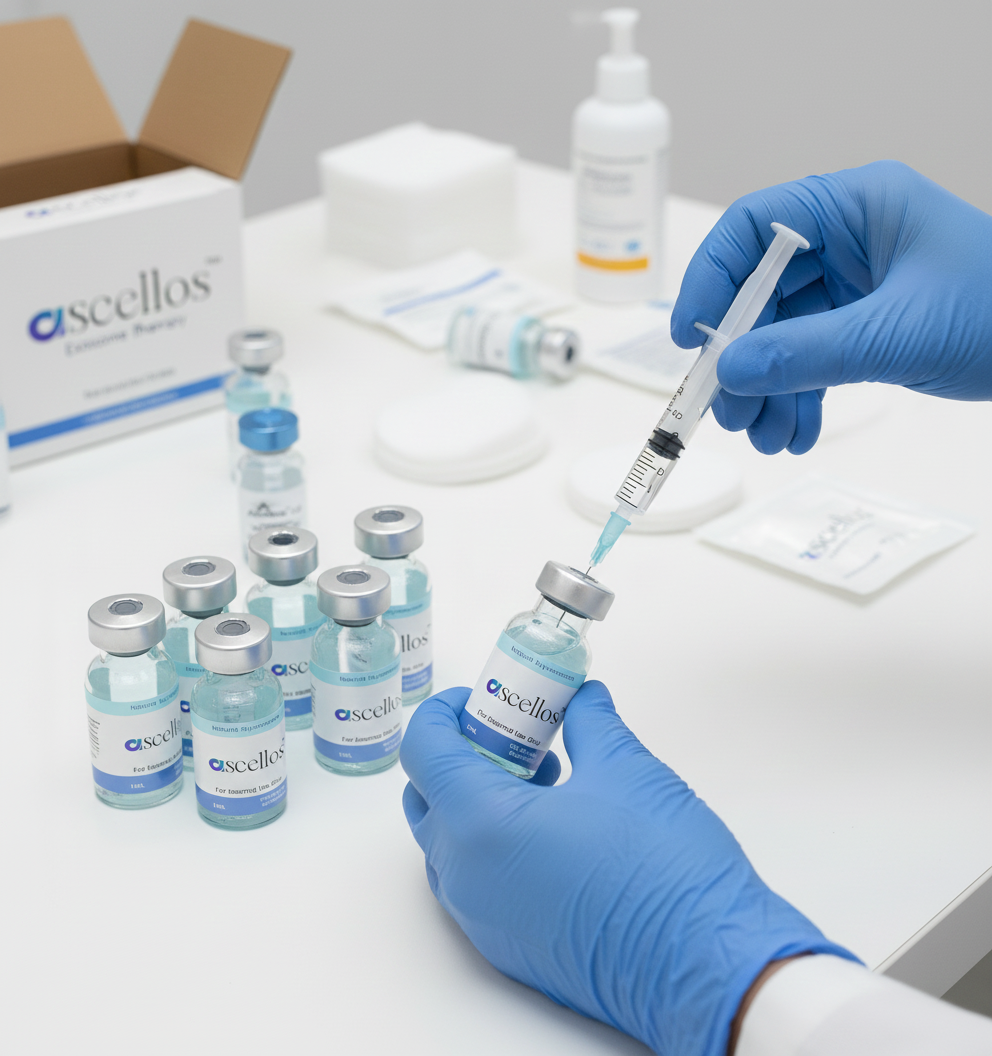
How Exosomes Work in the Body
Exosomes function as biological messengers. Once introduced into the body, they interact with target cells via membrane fusion or cellular uptake.
After delivery, their molecular cargo may influence:
- Gene expression related to tissue repair
- Collagen production
- Angiogenesis (formation of new blood vessels)
- Inflammatory pathway modulation
- Cellular survival mechanisms
Certain microRNAs and proteins within exosomes have been studied for their role in regulating inflammatory signals and supporting regenerative responses.
Because exosomes are acellular, they do not require cell engraftment. Their therapeutic activity is based on signaling rather than permanent tissue integration.
For mechanistic research: PubMed – Exosome Signaling link from RegenOMedix
Why Wharton’s Jelly–Derived Exosomes Are Commonly Used
Wharton’s Jelly, located within the umbilical cord, contains mesenchymal stem cells with strong regenerative characteristics.
Exosomes derived from these cells are often preferred because:
- They originate from biologically youthful tissue
- They demonstrate strong proliferative and signaling potential
- They have low immunogenicity
- They are ethically sourced post-birth
Preclinical research suggests that Wharton’s Jelly–derived exosomes may offer enhanced anti-inflammatory and regenerative signaling compared to adult-derived sources, though large-scale comparative trials are ongoing.
For further reading: PubMed – Cord Blood MSC Exosomes link from RegenOMedix
What Conditions May Be Evaluated for Exosome Therapy?
Exosome therapy is being investigated across multiple medical specialties.
Orthopedic & Joint Conditions
- Osteoarthritis
- Cartilage degeneration
- Tendon injuries
- Chronic joint inflammation
Neurological Applications
- Traumatic brain injury
- Neurodegenerative disorders
- Stroke recovery
- Peripheral neuropathy
Research in these areas focuses on neuroprotective signaling and modulation of inflammation.
Cardiovascular & Vascular Support
- Myocardial injury recovery
- Angiogenesis support
Pulmonary & Inflammatory Disorders
- Acute respiratory distress
- Chronic inflammatory lung conditions
Autoimmune & Inflammatory Conditions
- Rheumatoid arthritis
- Lupus
- Chronic immune dysregulation
Dermatology & Wound Healing
- Chronic wounds
- Scar remodeling
- Skin regeneration
For ongoing clinical investigations: ClinicalTrials.gov – Exosome Trials link from RegenOMedix
Safety & Regulatory Considerations
Exosomes are regulated as biologic products. Manufacturing typically follows Good Manufacturing Practice (GMP) standards to ensure:
- Sterility
- Purity
- Consistent molecular characterization
- Donor screening protocols
Most exosome-based therapies remain investigational, and clinical validation continues through ongoing research studies.
Common Safety Questions
Can Exosomal DNA Integrate into My Cells?
Current evidence suggests that Exosomal DNA fragments are unlikely to integrate into recipient DNA in a clinically meaningful way. However, long-term data is still evolving.
Could Exosomes Worsen Cancer?
There is no direct evidence that properly sourced exosomes can cause cancer independently. However, because exosomes influence immune and signaling pathways, individuals with active malignancy require careful medical evaluation before treatment.
For review references:
Learn more: PubMed – Exosome Signaling
Can Viral or Vaccine Proteins Be Transferred?
Donor screening and GMP laboratory processing protocols are designed to reduce the risk of viral transmission or residual biologic contaminants. Current evidence suggests the likelihood of clinically significant transfer is minimal, though ongoing research continues to evaluate long-term safety.
How Exosome Therapy Differs from Cell-Based Therapy
Unlike stem cell therapy, exosome therapy does not introduce living cells. Instead, it delivers signaling molecules derived from regenerative cells.
Because it is acellular:
- There is no cell engraftment
- Immune rejection risk may be reduced
- Manufacturing processes are simplified
- Treatment focuses on biologic communication rather than cell replacement
Exosome therapy may complement other regenerative approaches depending on patient-specific conditions.
Important Considerations Before Treatment
Before considering exosome therapy, discuss:
- Your specific diagnosis
- Prior treatments
- Current medications
- History of malignancy
- Expected outcomes
- Risks and uncertainties
Exosome therapy is not a universal solution. Patient selection and physician evaluation are essential for appropriate application.
SCHEDULE A CONSULTATION
Request a Physician Evaluation
Submit your information to connect with a participating physician in your region to determine whether regenerative therapy may be appropriate for your condition.