

Degenerative Disc Disease
What Is Degenerative Disc Disease?
Degenerative Disc Disease (DDD) is a condition involving progressive structural changes within the intervertebral discs of the spine. These discs act as shock absorbers between vertebrae, allowing flexibility, load distribution, and smooth spinal movement. Over time, discs may lose hydration, elasticity, and structural integrity, reducing their ability to cushion and stabilize the spine.
Although referred to as a “disease,” degenerative disc disease is primarily an age-related and mechanical process. As discs thin and weaken, the space between vertebrae may narrow, increasing stress on facet joints, ligaments, and surrounding muscles. In some cases, disc degeneration may contribute to disc bulging, herniation, or nerve irritation.
Degenerative disc disease can occur in the cervical spine (neck), thoracic spine (mid-back), or lumbar spine (lower back), with the cervical and lumbar regions being most commonly affected. The condition may remain asymptomatic in some individuals, while others experience chronic pain and mobility limitations.
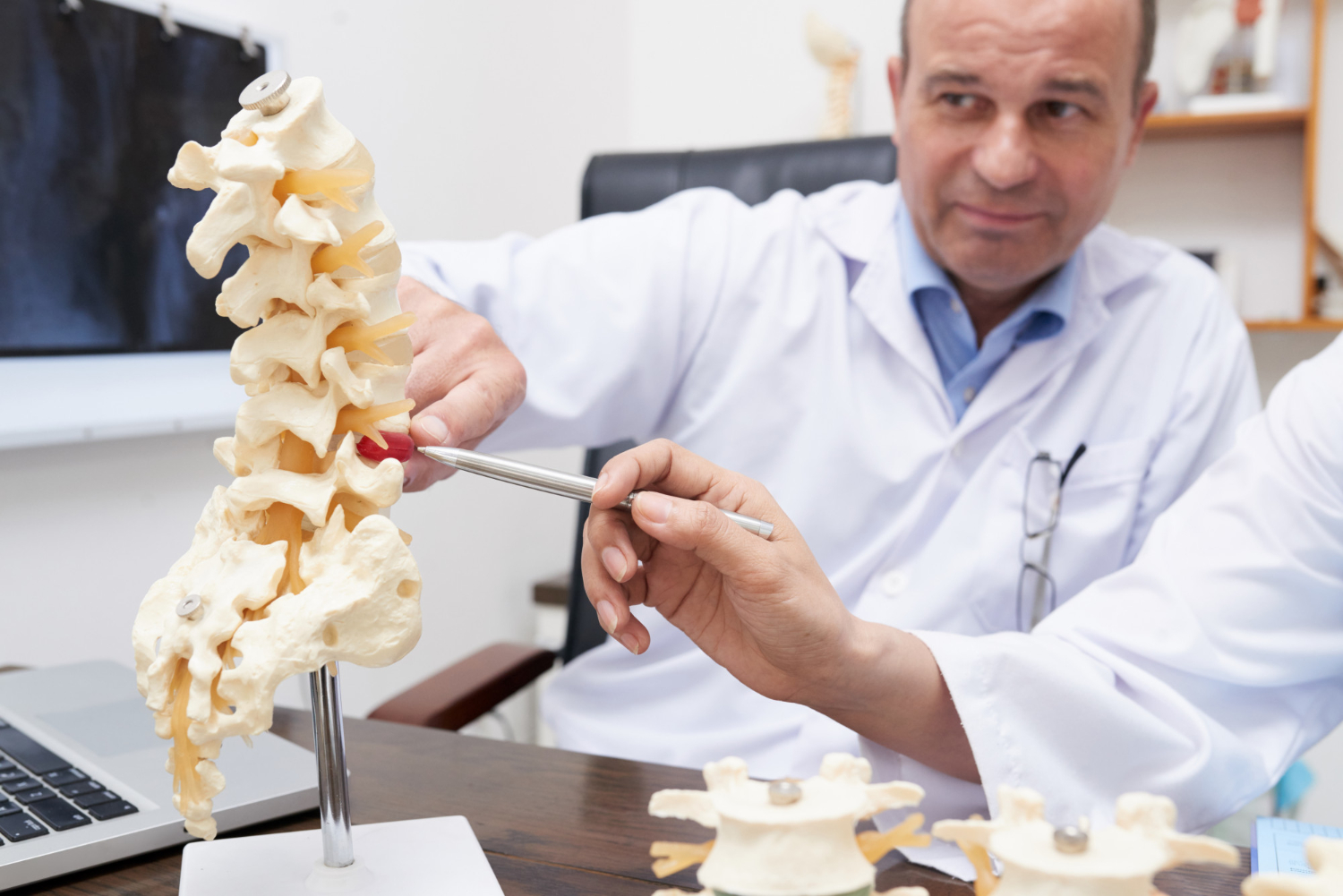
What Are the Causes
Degenerative disc disease develops through a combination of aging, mechanical stress, and biological changes within disc tissue.
With age, intervertebral discs gradually lose water content, reducing their height and flexibility. This dehydration weakens the disc’s outer fibers and decreases its ability to absorb shock. Repetitive loading, prolonged sitting, heavy lifting, or high-impact activity can accelerate this process.
Prior spinal injury may alter biomechanics and increase localized stress on specific discs. Smoking, obesity, poor posture, and genetic predisposition can also contribute to faster degeneration by impairing blood supply and nutrient exchange within disc tissue.
As discs deteriorate, increased pressure on facet joints and surrounding structures may lead to secondary inflammation and pain. In some cases, disc thinning contributes to spinal instability or nerve compression.
In most individuals, degenerative disc disease results from cumulative wear combined with age-related tissue changes rather than a single traumatic event.
Symptoms
Symptoms vary depending on the location and severity of degeneration.
In the lumbar spine, individuals often experience chronic low back pain that may worsen with prolonged sitting, bending, or lifting. Pain may improve with movement in early stages but can become persistent over time.
In the cervical spine, degeneration may cause neck pain, stiffness, and discomfort radiating into the shoulders. If nerve roots are irritated, symptoms may include tingling, numbness, or weakness in the arms or legs depending on the affected level.
Mechanical back pain associated with degenerative disc disease often fluctuates in intensity. Some individuals report episodic flare-ups triggered by activity, while others experience ongoing stiffness and reduced spinal mobility.
In advanced cases, disc collapse may contribute to spinal narrowing (stenosis), increasing nerve-related symptoms.
How Many People Are Affected?
Degenerative disc changes are extremely common and increase with age.
Imaging studies show that a significant percentage of adults over age 40 demonstrate disc degeneration, even if they do not report symptoms. By age 60, disc thinning and dehydration are frequently present.
While many individuals remain asymptomatic, degenerative disc disease is a leading contributor to chronic neck and low back pain worldwide. As populations age and sedentary work increases, the prevalence of disc-related spinal discomfort continues to rise.
Complications
If progressive degeneration is not appropriately managed, structural stress within the spine may increase over time.
Disc height loss can place additional strain on facet joints, contributing to facet arthropathy and chronic inflammation. In some cases, nerve root compression may develop due to disc bulging or narrowing of spinal canals.
Persistent pain may reduce physical activity, leading to muscular weakness and decreased spinal stability. Altered posture and compensatory movement patterns may increase strain on surrounding regions, including the hips and shoulders.
Advanced degeneration may eventually contribute to spinal stenosis or instability requiring surgical evaluation.
Early management helps reduce mechanical overload and preserve long-term spinal function.
Diagnosis
Diagnosis begins with a comprehensive clinical assessment including review of symptoms, activity history, and physical examination. A healthcare provider evaluates spinal mobility, neurological function, posture, and pain patterns.
Imaging studies play an important role in confirmation. X-rays may reveal disc space narrowing and alignment changes. MRI provides detailed visualization of disc hydration, bulging, herniation, and nerve involvement.
At Victory Over Pain, Diagnostic Ultrasound may assist in evaluating surrounding soft tissue structures and guiding regenerative procedures when indicated. Accurate diagnosis integrates clinical findings with imaging results to determine the severity and guide individualized treatment planning.
Treatment Options
Treatment focuses on relieving pain, restoring spinal stability, and slowing further degeneration.
Initial management typically includes structured physical therapy aimed at strengthening core musculature, improving posture, and restoring movement mechanics. Activity modification reduces excessive spinal loading.
Low-Level Light Therapy (LLLT) may be incorporated to support soft tissue recovery and modulate inflammatory signaling in superficial muscular or joint-related spinal discomfort.
Extracorporeal Shockwave Therapy (ESWT) may be evaluated in cases of chronic myofascial or ligament-related pain associated with degenerative changes.
Platelet-Rich Plasma (PRP) therapy may be considered in select cases involving facet joint irritation or ligamentous instability under image guidance.
In more advanced or chronic degenerative disc conditions, MSC-derived exosome therapy or stem cell therapy may be evaluated to support cellular signaling and optimize the biological environment surrounding degenerated disc structures.
Surgical intervention is typically reserved for cases involving significant nerve compression, instability, or failure of comprehensive conservative and regenerative management.
Modern spine care emphasizes early intervention, personalized treatment strategies, and preservation of spinal integrity to maintain long-term mobility and quality of life.